Can AI learn taste?
Fashion first. The broader question reaches every visual craft, product design included: can a model learn what someone loves, or only what is average?
An experiment in whether AI can learn taste without flattening it. Some days I dress myself and explain why. Other days the robot dresses me. Both get the same feedback, and I keep the final say.
Getting dressed is my favorite place to start. It's personal, it's visual and it happens every single morning, which makes it the perfect playground for the question: what happens to taste when AI joins in?
Fashion first. The broader question reaches every visual craft, product design included: can a model learn what someone loves, or only what is average?
Building my closet, understanding my own taste and refining it, and making it simple to get dressed well from what I already own.
How I concept and prototype products: the prompt library, this site, and maybe a real product, built in the open as the experiment runs.
Taste isn't one score. It's four layers, from what the culture says is current down to what works for you this morning. Here's how I'm breaking it down, for anyone getting dressed and for anyone building models.
Is the outfit on trend?
Do I care?
Trends start with tastemakers and trickle down. Then they swing like a pendulum: once everyone has the new thing, the people setting trends reach for the old one to stand apart. That is why classic can be the most current move. Lean in, stay put, or borrow one piece.
Distance from a dated reference corpus (e.g. Vogue, by season), scored against the target the brief sets, not maximized. Models must track direction as well as position: trickle-down diffusion (Simmel) and status signals that move up from below (Bellezza's trickle-round). Refreshed each season.
Does it feel like me?
Do I feel confident in it?
A great outfit on a hanger can be wrong on you. This is about your coloring, your shape and your signature moves.
Ground truth is the person. Blind pairwise preference vs. their own pick, plus "felt like me" ratings. On-hanger and on-body judged separately.
Does the outfit work for
what I plan to do?
School pickup is not a date, and a date is not the office. And then the real-life questions: What's the weather? Am I walking? What's even clean?
Mostly pass or fail: hard constraints from the brief, plus "worked for my day." Style dials shift by context.
Is the outfit well executed
based on timeless principles?
Take what's current, what's you and what the day needs, then pull it off. Color, proportion, silhouette, texture: the timeless rules of good design, like why navy and brown work together. Once you know the rules, you can break them on purpose.
Rubric score: color relationships, proportion, silhouette balance, texture, cohesion. Expert raters or a model judge. The most objective layer.
There's no “right” answer. It's about developing your personal style over time and tuning it as needed to different contexts.
Each outfit maps to coordinates on six axes. A person's style is a distribution per context. The model has to learn the region, not the mean.
I put it on, and I don't change a thing.
My outfits come with a note on why they work. The robot's get a scorecard on all four layers. On Sundays you guess who styled it. If you can't tell, it's a good sign the robot has learned my taste.
Try it on any outfitResolved = worn as-is. Swaps are the edit distance.
| SWE-bench | Taste benchmark |
|---|---|
| Repo snapshot | A real closet: cataloged items, taste references, rated history |
| Issue | A brief: plans, weather, constraints |
| Patch | An outfit of owned item IDs, plus styling notes |
| Hidden tests | Three tiers of checks, below |
This experiment. Every day is a task, my pick is the human baseline, Sundays are the blind eval.
Volunteers from the Instagram audience, same task format.
Published tasks and a leaderboard: models vs. stylists vs. the people themselves.
What I want to find out, how it works and how I'll know. Findings come later, once there's real data to share.
The robot can style me as well as I style myself.
How it worksIt's a teaching loop, not a contest. Monday, Wednesday and Friday are mine: examples, each with a training note on why it works. Tuesday, Thursday and Saturday are the robot's: attempts, each with feedback on how it went. Sunday is the showdown: you guess who styled it.
Matching me is only the first bar. Over time, I hope the robot outperforms me, putting together outfits I love even more than the ones I'd pick myself. And since style keeps evolving with the wider culture, think of this as a two-fold adventure: honing my own style, then letting it evolve based on how much (or how little) I want to take part in broader trends.
[Love it rate on robot looks as-is] ÷ [Love it rate on my own looks]
1.0 means the robot dresses me as well as I dress myself. Above 1.0, better. Checked every two weeks.
In addition to my outfits and notes, the robot also gets outside inspiration: the people and brands below. It reads them before every outfit, alongside my closet and past feedback, so they shape what it picks.
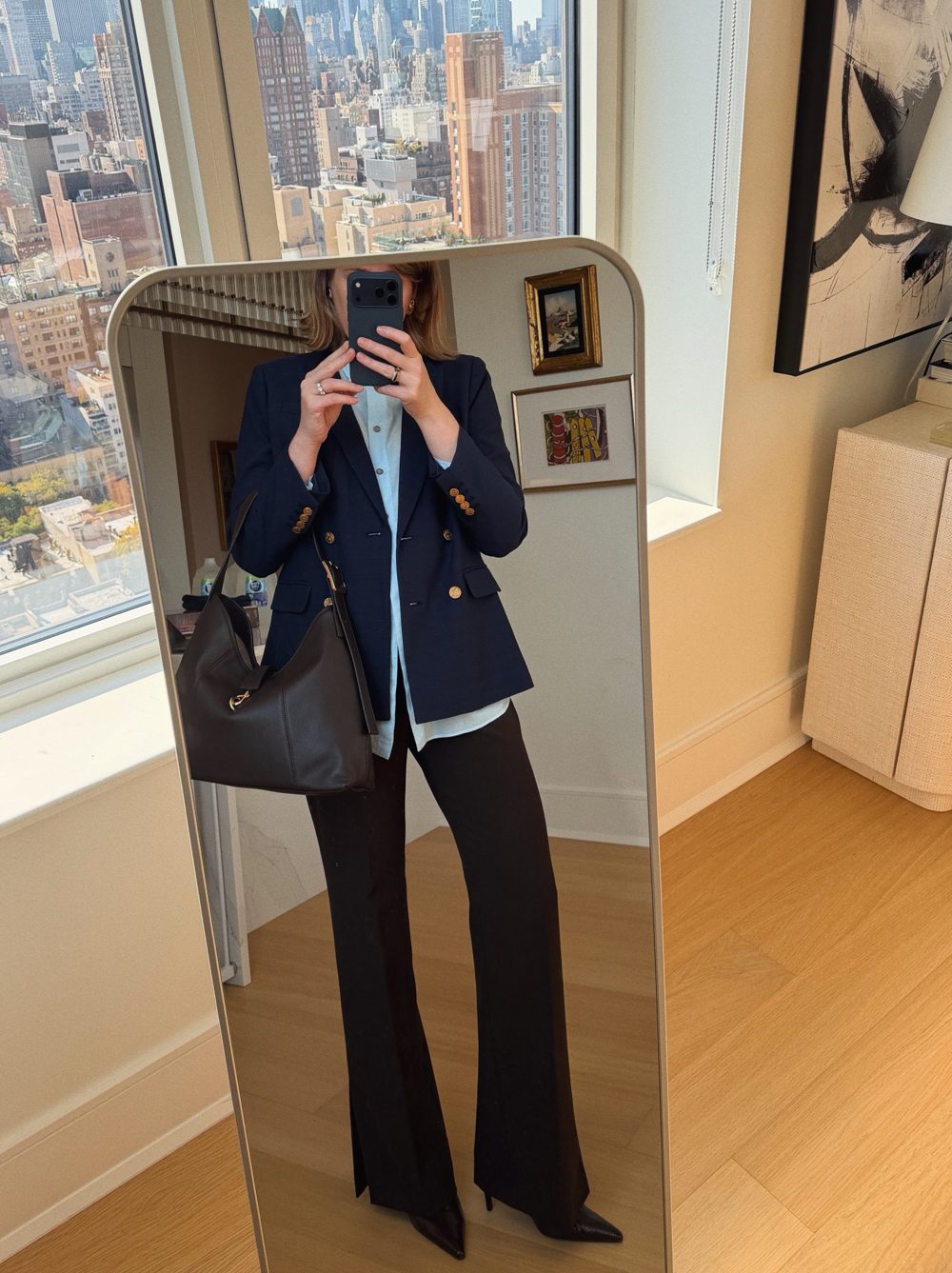
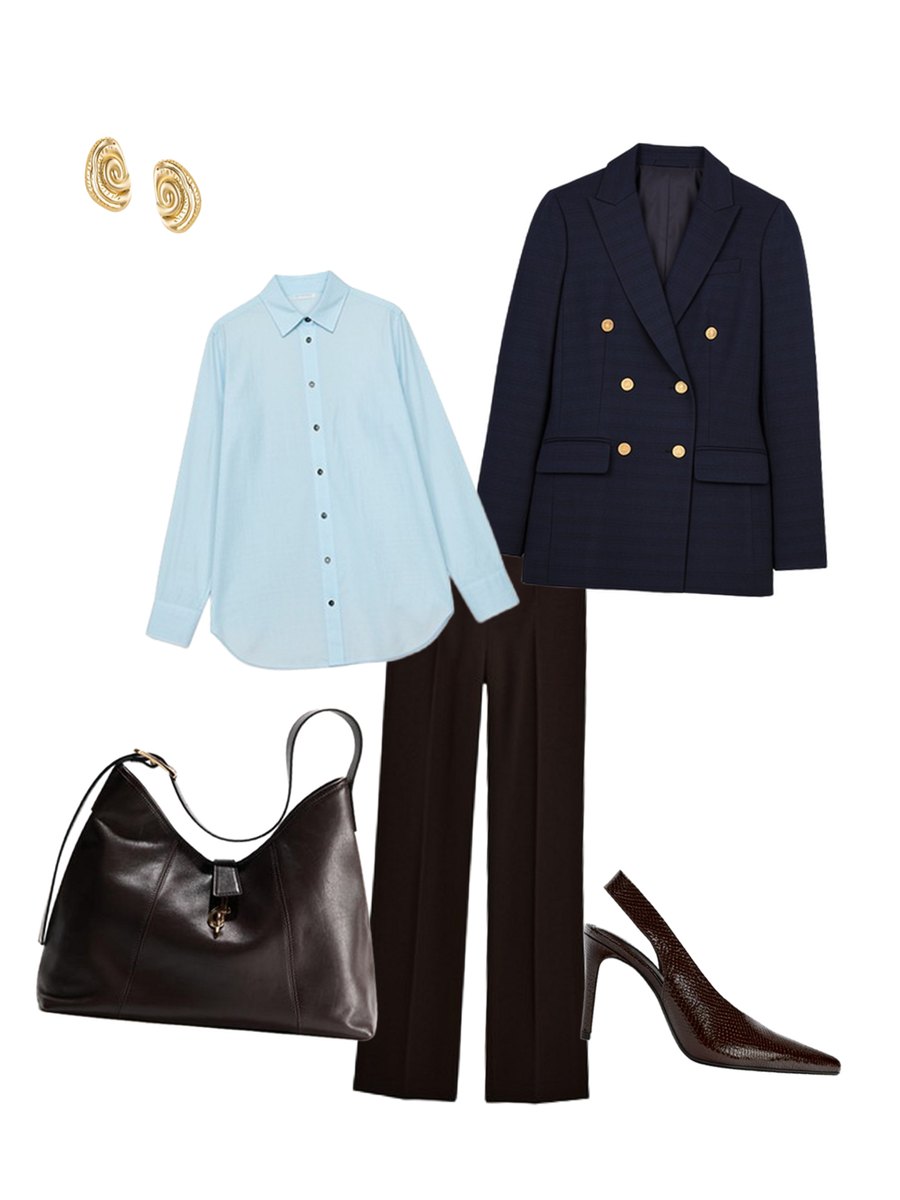
Every outfit so far. My days come with a training note on why it works; the robot's come with feedback on how it went.
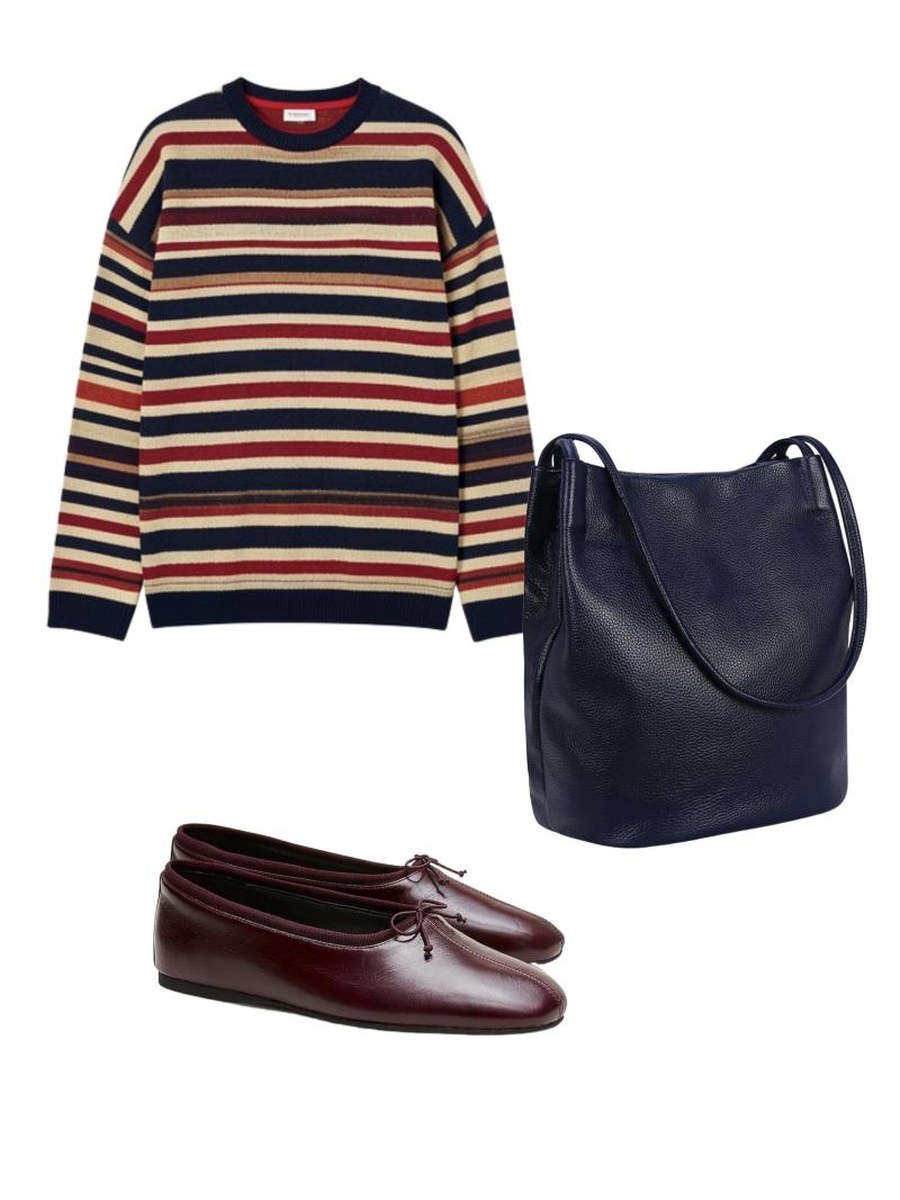
I get dressed, snap the outfit and provide notes. The robot analyzes it, indexes it and creates a board.
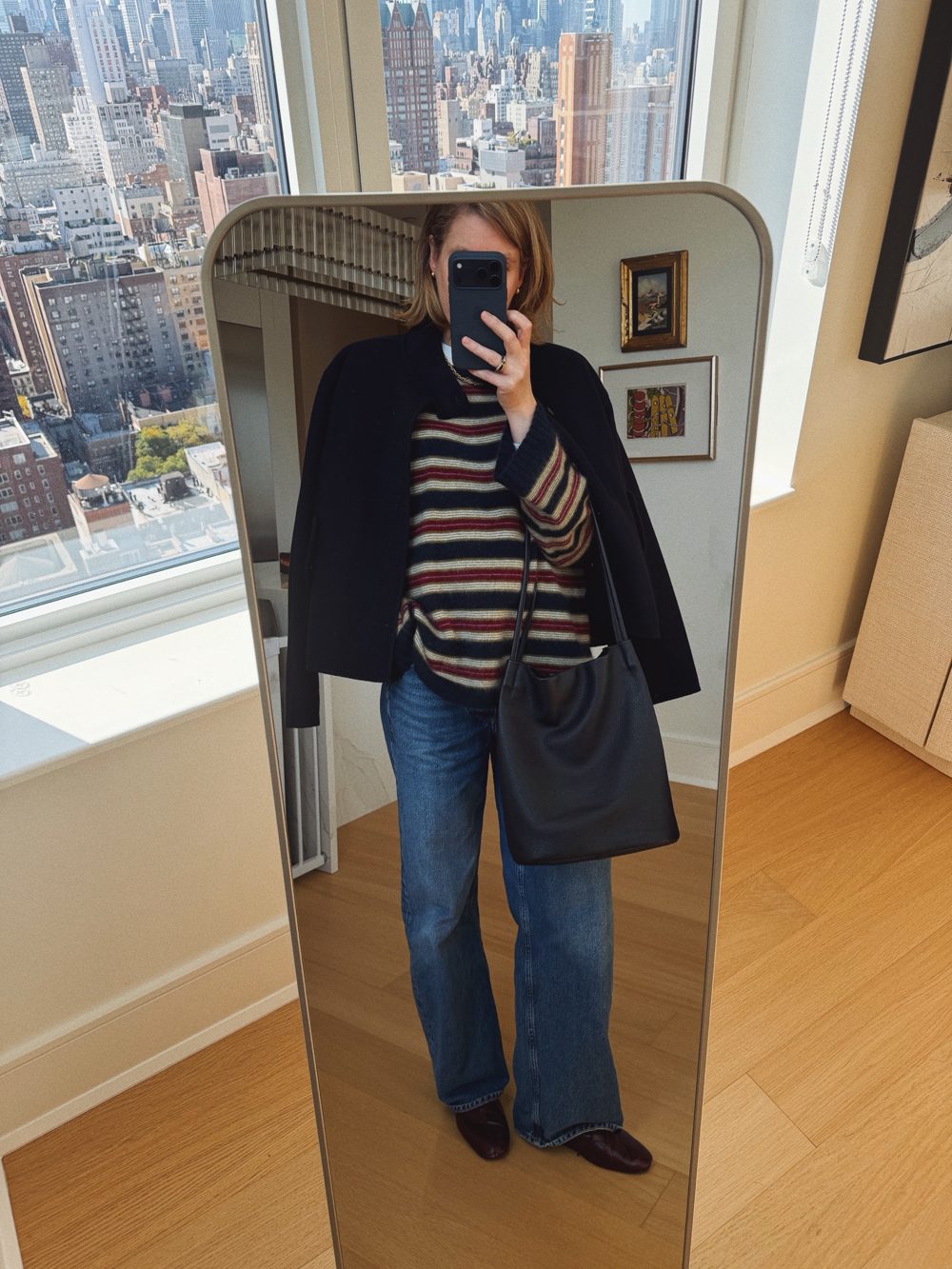
I wanted something casual enough for school pickup but nice enough for breakfast out. It's getting colder, so I went for layers. I'm loving my new La Ligne sweater, and the color story works: navy, burgundy and cream, with burgundy flats picking up the stripe.
*Love it: I'd wear it again. Fine: felt good, probably wouldn't repeat. Meh: wouldn't repeat, and didn't love how I felt.
The robot creates a board from my closet. I then get dressed, snap the outfit and give feedback.
*Love it: I'd wear it again. Fine: felt good, probably wouldn't repeat. Meh: wouldn't repeat, and didn't love how I felt.
My first outfit and why I reached for it.
UpcomingOne piece from Monday, styled a different way.
UpcomingThe small detail that makes an outfit mine.
Upcoming"More like me": a revision of Tuesday.
Upcoming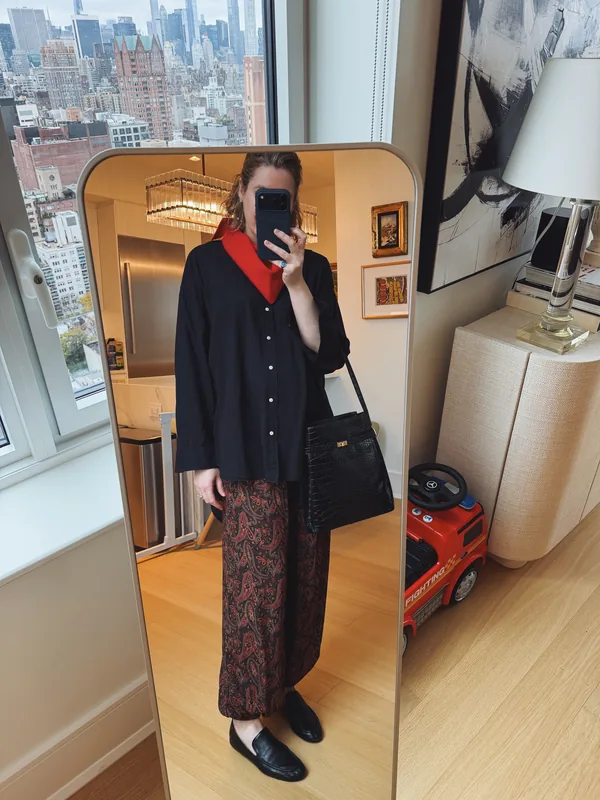
A busy day. What practical need came first?
PostedA real brief, no new purchases.
UpcomingWho styled it? Guess, then which and why.
UpcomingA piece I love but rarely wear.
UpcomingThe same piece, the robot's way.
UpcomingAn outfit I'm happy to repeat.
UpcomingOne change to that repeat. Better, or just different?
UpcomingDressing for a mood.
UpcomingSame mood, plus a practical constraint.
UpcomingBlind round: one look, no labels.
UpcomingNo custom code yet. A digital wardrobe app, a shareable closet link and an AI assistant were enough to start.
Every piece photographed in a digital wardrobe app. I use INDYX. One item per photo.
A public closet link lets the assistant read every item and check for new ones daily.
People, brands and an editorial source, each with a note on what to take from it.
Real plans and weather go in. A board of my own pieces comes out. I make one edit.
Two scores and a sentence after wearing it. That note is the training data.
The “robot” is not some secret fashion AI. We are just using a general AI model plus a page of notes (for now).
The model itself never changes. The notes do, and that's how it learns. Next, we'll explore how this data and these feedback loops could train two things: a broader fashion model that understands style in general, and a layer tailored to my own taste and the contexts I dress for.
The prompts that worked, ready to copy. Fill in the brackets with your own closet and references.
Here are the people and brands whose style I love, with what I take from each:
[name] for [quality]
[name] for [quality]
Brands: [list]

Find the common threads: palette, silhouettes, fabrics, and the rules they break. Then tell me what my taste is in five plain sentences I can agree or argue with.
Using [editorial source] as the trend reference, tell me which current trends fit the taste profile we wrote and which would feel like a costume on me. Explain each in one line.
From my closet only (no new purchases), style one outfit for this day:
Plans: [plans]
Weather: [weather]
Must-haves: [e.g. walkable shoes]

Name each piece exactly as it appears in my closet. If you are unsure whether I own something in a photo, say so instead of guessing.
I like [piece] but rarely wear it because [reason]. Give me three ways to wear it with things I already own, from safest to boldest, and say what problem each one solves.
I wore your outfit. Worked for my day: [1–5]. Felt like me: [1–5]. I changed [item] because [reason].

Update your notes on my taste. Tell me what you'll do differently next time, and what you'll keep.
Here is an outfit I repeat: [pieces]. Change exactly one item. Tell me why, and whether you think the result is better or only different.
Make an outfit board from my actual closet photos. Use a loose, organic layout with varied composition and no text. Add an inspiration image only if it adds atmosphere, such as a color or texture echo of one piece.
Here is this Sunday's brief: [brief]. Style a look for it from my closet without seeing mine. Give me only the board, so the A/B comparison stays blind.